
Sanden Compressor Conversions for M20-Powered BMW E30s
M20-powered E30s were originally fitted with one of three air-conditioning compressors: Bosch, Seiko (largely identical to Bosch), or Denso.
This guide specifically focuses on converting E30 M20 cars that were originally equipped with Denso 10P15E compressors to a Sanden compressor. The reason for this focus is the commonality in SAE fitting sizes, which makes the conversion significantly more straightforward compared to Bosch or Seiko-equipped cars.
The factory E30 A/C system uses SAE-sized fittings:
-
Denso compressors use #10 (suction) and #8 (discharge)
-
Bosch/Seiko compressors use #12 (suction) and #8 (discharge)
Because Sanden compressors are readily available with #10 and #8 SAE ports, Denso-equipped cars require fewer adaptations and allow the original hoses and system layout to be retained with minimal modification. While Bosch/Seiko cars can also be converted, they typically require additional hose changes or custom fittings and are outside the primary scope of this guide.
Sanden compressors are available in many configurations, offering different suction and discharge sizes as well as multiple port orientations. This flexibility makes them attractive replacements—but also adds complexity.
——————————————————————————————————————————————————————-
Refrigerant Choices: USA vs. Rest of the World
Online discussions around refrigerants often split into two camps: the United States and everywhere else.
In most parts of the world, hydrocarbon-based drop-in refrigerants (such as R12a, HC-12, etc.) are widely used as direct replacements for R12. These products are commonly available at major retailers—Walmart, Home Hardware, and similar stores under brands such as Redtek, Duracool, Ultracool—outside the USA.
In the United States, however, hydrocarbon refrigerants occupy a legal and cultural gray area in automotive use. While hydrocarbons like R290 (propane) are widely used in non-automotive applications, several factors have limited their adoption in vehicles:
-
Evacuation regulations
Laws require professional evacuation of old refrigerant, and many shops lack the training, insurance, or willingness to work with hydrocarbon refrigerants. -
EPA approval confusion
Automotive refrigerants are generally regulated by the EPA. Hydrocarbon replacements have not been explicitly “approved,” often citing a “lack of studies.” However, this is somewhat misleading: hydrocarbons are not ozone-depleting substances, so the EPA does not actually have the same regulatory authority over them as it does over CFCs and HFCs. This is why hydrocarbon refrigerants can still be found—albeit with more difficulty—in the US. -
Flammability concerns
Hydrocarbon refrigerants are flammable, as they are essentially a blend of propane (R290) and butane (R600a). That said, a typical A/C charge contains roughly 12 ounces of refrigerant—far less hazardous than driving around with 55 liters of gasoline. Additionally, hydrocarbon refrigerants are odorized, making leaks easier to detect.
——————————————————————————————————————————————————————-
Why Use Hydrocarbon Drop-In Refrigerants?
There are several compelling reasons to use hydrocarbon refrigerants in an E30:
-
Larger molecular size
Hydrocarbon molecules are larger than those of R12 and R134a, resulting in fewer leaks. -
Oil and seal compatibility
They are fully compatible with mineral oil and the original factory O-rings. R134a conversions require new hoses, different oil, and replacement of all seals. -
Higher efficiency
In like-for-like systems, hydrocarbons consistently outperform CFC and HFC refrigerants. -
Lower operating pressures
Low-side pressures closely match R12, while high-side pressures are significantly lower. This reduces system strain, minimizes leak risk, and eliminates the need to change pressure switches. -
Non-toxic and easy to source
In many jurisdictions, hydrocarbon refrigerants can be purchased and installed without licensing—one reason they’re sold retail in places like Walmart Canada.
——————————————————————————————————————————————————————-
What This Means for Sanden Conversions
All of this allows us to fit a Sanden compressor to an M20 E30 far more easily than a full R134a conversion. With hydrocarbons, there’s no need to replace hoses, switches, O-rings, or the condenser.
At a minimum, you’ll need:
-
A compressor mounting bracket
-
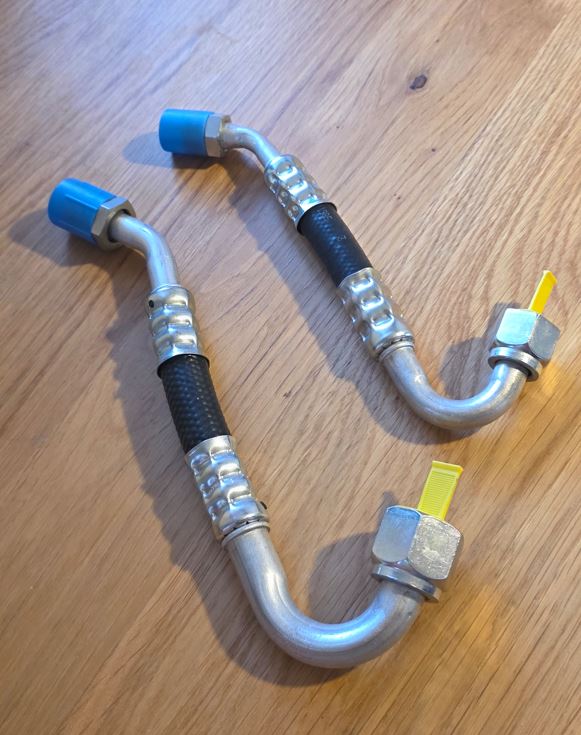
A pair of adapter hoses (often called manifold hoses) to mate the Sanden compressor to the factory lines
There are nuances to doing this correctly, which are outlined below.
——————————————————————————————————————————————————————-
Compressor Bracket
Several companies offer brackets to mount a Sanden compressor on the M20. One example is:
LC Wylie
https://lcwylieco.bigcartel.com/product/m-20-bmw-sanden-conversion-bracket
——————————————————————————————————————————————————————-
Compressor Options
There are two commonly used Sanden compressors for the E30 M20:
-
SD709 (also known as SD7H15)
-
SD508 (also known as SD5H14)
The SD709 is essentially a higher-displacement version of the SD508. Both compressors are available in dozens of configurations, with specific part numbers defining clutch type and port size/orientation.
Recommended Compressor
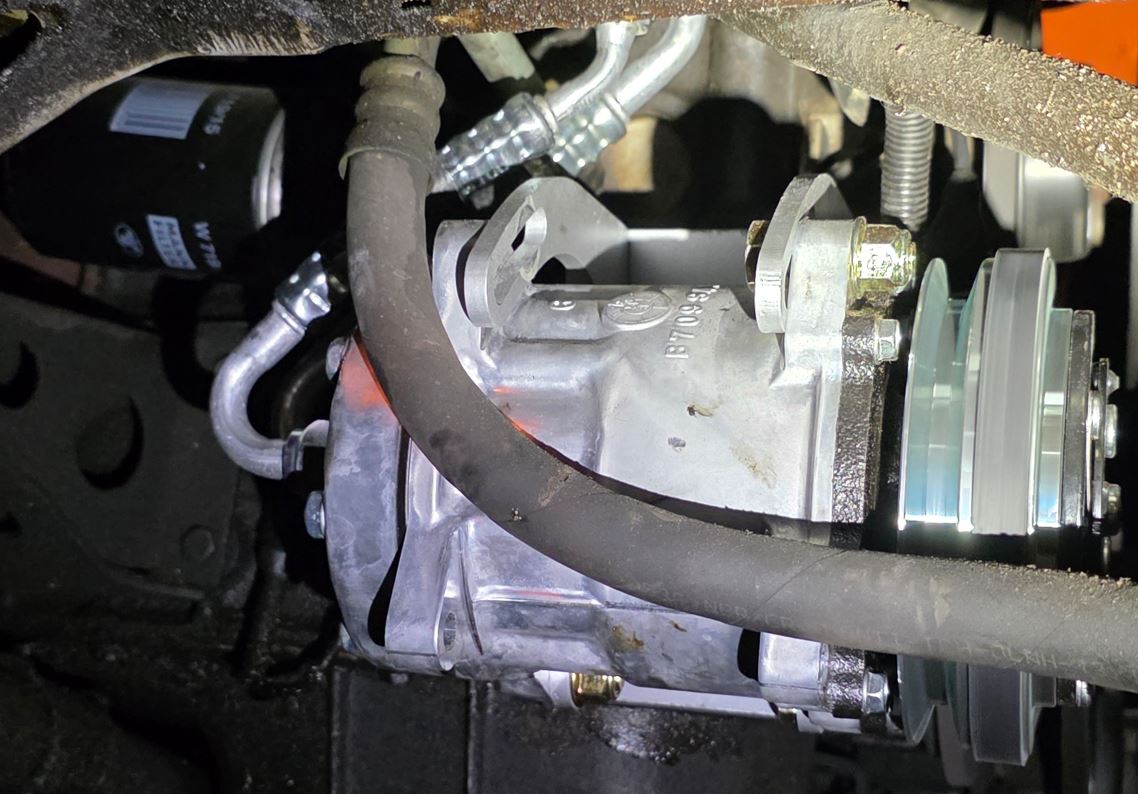
The recommended unit is the Sanden 4272 (8227), mounted with a 90-degree rotation, placing the larger port toward the driver’s side after rotation.
The factory Sanden service manual explicitly allows the compressor to be mounted 90 degrees in either direction. The square mounting pattern makes this possible without modification and results in an optimal port orientation for rear-exiting hose adapters.
https://www.sanden.com/productlibrary/manuals/SD_Service_Guide_Rev_2.pdf
——————————————————————————————————————————————————————-
Compressor Belt
Sanden compressors are available with different pulley diameters:
-
132 mm pulley → Gates 9341
-
125 mm pulley → Gates 9335
Be sure to verify pulley size before ordering.
The Sanden 4272 (8227) compressor utilizes Gates 9341.
——————————————————————————————————————————————————————-
Compressor Oil
Sanden compressors ship pre-filled with PAG oil, which must be removed.
-
Remove the single 12 mm drain bolt
-
Fully drain the PAG oil
-
Refill with mineral oil in the exact same quantity
This avoids the need to replace O-rings and ensures compatibility with any residual mineral oil already in the system.
Recommended oil:
Four Seasons 59000 – R12 Compressor Oil
——————————————————————————————————————————————————————-
Wiring
There is a single wire coming from the Denso for clutch activation, as there is a single wire coming off the Sanden. So they are identical in function, and no wiring changes need to be made.
Either cut the old connector from the original Denso compressor if you want to retain the factory plug or create your own new plug to connect the car to compressor.
——————————————————————————————————————————————————————-
Hose Adapters
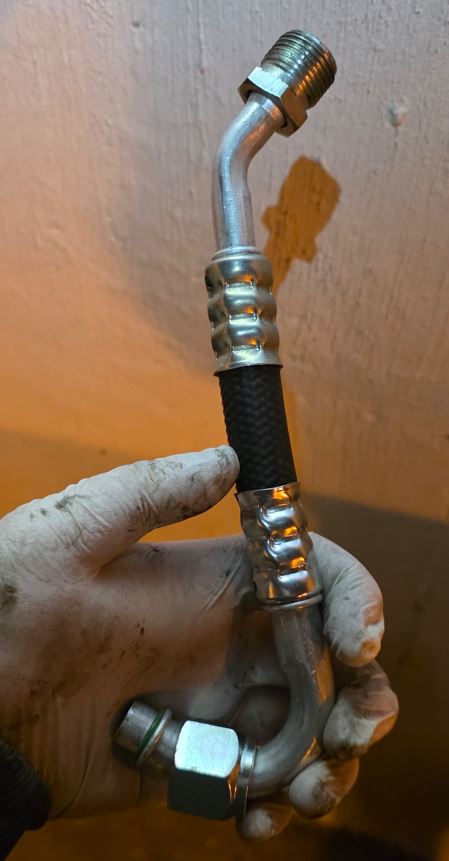
This is the most challenging part of the conversion, as it requires specialty fittings. Fortunately, we have the correct adapters available.
These hoses:
-
Bolt directly to the rear ports of the Sanden compressor
-
Adapt to the factory E30 A/C lines
-
Clear the factory oil cooler without modification
-
Allow retention of the factory fuel cooler where equipped
Once installed, simply pull a vacuum and recharge the system with the chosen R12a hydrocarbon refrigerant.
For a refresher on vacuuming and recharging:
https://www.rtsauto.com/how-to-recharge-the-ac-in-your-car-eg-used-will-be-e30-and-how-to-use-ac-manifold-gauges-and-pull-vacuum/
*Fitting these to an E30 originally fitted with a Bosch or Seiko compressor will require swapping to a factory Denso suction line (Requires PN 64531380542).
 If you are interested in joining our mailing list, please submit your email below.
Recent Comments